
Before dawn, the assistant priest who opens the sanctum sends word of a family emergency. The office clerk is not sure who else holds that key, the senior cook has their own idea of who should, and the first devotees are already at the gate. The knowledge exists, spread across several heads.
What should a temple write down first?
Write down access and cover first: each key, cash point and daily duty, the person responsible and the trained substitute. Next, open a file for every paid worker showing role, start date, terms and each part of their pay. Then register volunteers and festival helpers. Review all three with the trustees before the next major festival.
Registers for access and daily duty
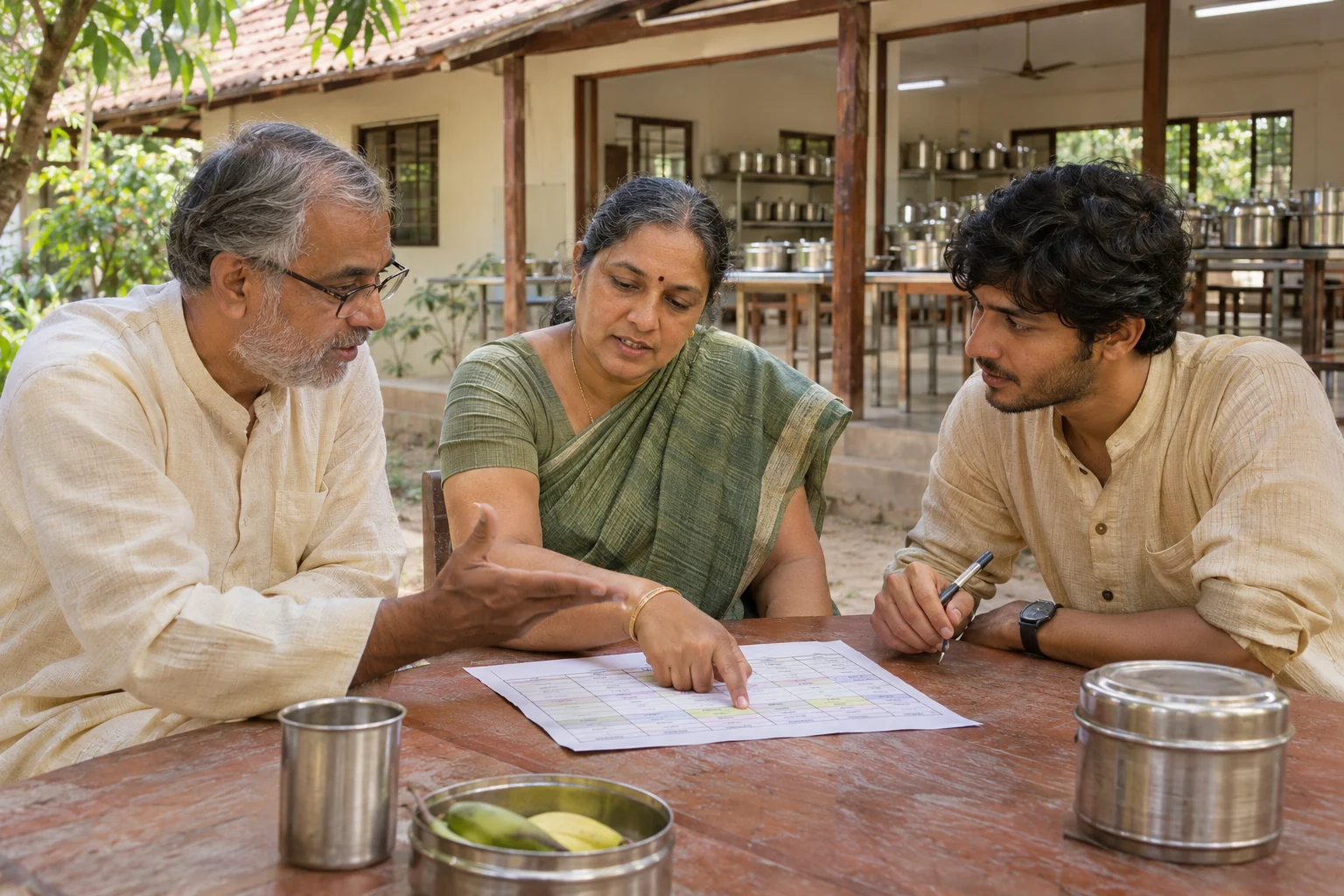
Walk through one ordinary day from the first bell to closing. Note who opens the sanctum, the ornament store, the kitchen stores, the donation boxes and the office. Note who lights, who cooks the offering, who ties garlands, who runs the counter and who locks up. Beside each name, write the substitute. A blank in that column is your most useful finding.
Some duties can be performed only by a priest with particular initiation or training. Record that limit plainly and with the head priest's agreement, so that nobody is rostered to a task that custom does not permit. Where no second qualified person exists, the trustees need to know and decide what happens on a day of illness.
Duty or lock:
Time it is needed:
Person responsible:
Trained substitute:
Custom or qualification limit:
Key number held:
Issued on:
Returned on:
Cash or valuables involved:
Second person present:
Checked by trustee on:
One file for each paid person
Salary, honorarium, a share of offerings, meals, lodging and festival gifts accumulate over years, each agreed for a good reason that nobody wrote down. A file sets them out part by part. For every item record what it is, how it is worked out, when it is given, who approved it and whether it is a right under the person's terms or a gift the trustees choose each time.
- Name, contact, emergency contact and the identity details your rules require.
- Role, date of joining and any family or hereditary arrangement, described factually.
- Signed terms or, where none exist, a dated note of present practice agreed with the person.
- The pay parts, with quarters or food provided listed alongside money.
- Leave taken, duties changed, training in crowd or kitchen safety, and any written concern with its outcome.
Do not use the exercise to reduce anything quietly. If two cooks receive different amounts, write down both and the reason if one is known. Trustees can then decide a rule openly, with notice, instead of discovering the difference during a quarrel.
Build the records in this order
- 1
Appoint a keeper
The executive officer or office clerk maintains the registers, and one named trustee checks them. Lockable storage and restricted access matter as much as the layout.
- 2
Count the keys
Match every lock to every holder, including former staff and long-standing devotees. Recover or change what cannot be accounted for.
- 3
Open staff files
Start with those who handle valuables or perform duties without a substitute. Read each pay record aloud with the person and note any disagreement rather than overruling it.
- 4
Enrol volunteers
Record name, contact, tasks, training, access given and the permanent staff member who guides them. Add an end date to any festival access.
- 5
File board decisions
Every decision on leave, pay, posts or successors gets a short written rule, a date, an owner and a copy in the files it affects.
Using the records in festival week
A month ahead, take the duty register and mark where crowds multiply the work: queue lines, counters, kitchen, footwear stand, decoration and sanitation. Assign permanent staff to lead each point and place helpers beneath them. Check which volunteers have done the task before. Issue temporary keys and badges against signatures, then collect them on the closing day. Note what broke while memories are fresh.
Settle hereditary and family arrangements on paper
Where a post passes within a family, record how that happens in practice: who may succeed, who confirms it, what training the successor needs and who performs the duty in the meantime. Write what is agreed and mark what is disputed. Do not let the office clerk interpret custom alone. The head priest, the trustees and the family should each see the wording, and your adviser should check it against the trust deed and local rules. A written account will not end every disagreement, but it stops each side relying on a different memory at the moment a successor is needed.
Keep cash and valuables entries separate
Counter takings, donation box counts and ornaments taken out for festivals deserve their own bound or controlled log. Record date, time, amount or item, the two people present and where it went. The staff file then simply notes who is authorised for these tasks and since when. This protects honest workers as much as the institution, because a missing garland ornament or a short count can be traced to a moment instead of turning into suspicion of whoever happened to be nearby. Remove authority in writing when someone changes duty or leaves.
What not to do
Avoid a thick manual that tries to codify ritual itself; that belongs to the priests and their tradition. Do not photograph identity documents on a devotee's personal phone. Do not post the pay register where others can read it. And do not wait for every old fact to be settled before starting, since an entry marked 'to be confirmed' is better than an empty page.
Keep the language of every register the one staff actually read, and use pictures or colour tags for keys where that helps a cleaner or marshal. A record that only the office clerk can understand fails on the morning the clerk is away, so ask a second person to find a duty and its substitute without help.
The next two things
Once the registers hold through a festival, write a plain explanation of each pay part and how changes are decided. Then agree how new priests and cooks learn and are admitted, including who trains them and what the trustees need to see. Appraisal forms and attendance machines can come well after both.
Where to go next
See HR for temples and how employee records and personnel files are organised. Trustees who want help turning present practice into written files can tell us their requirements.