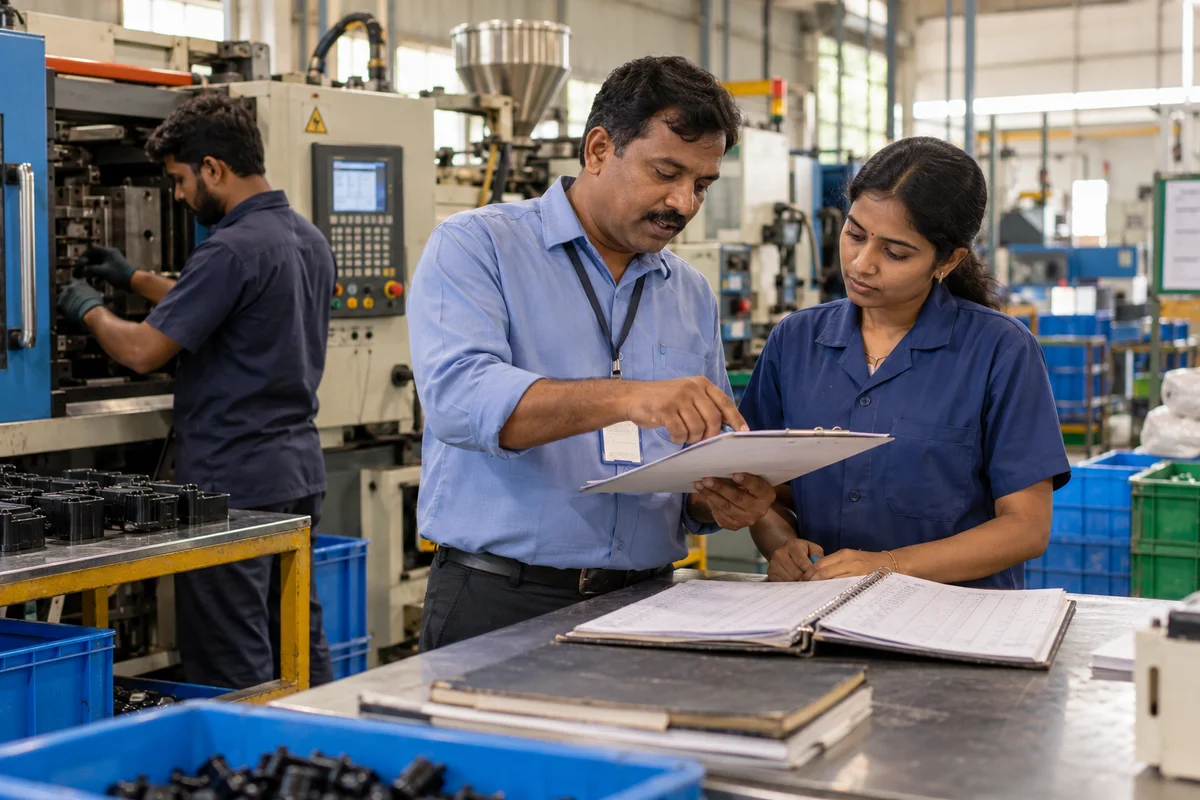
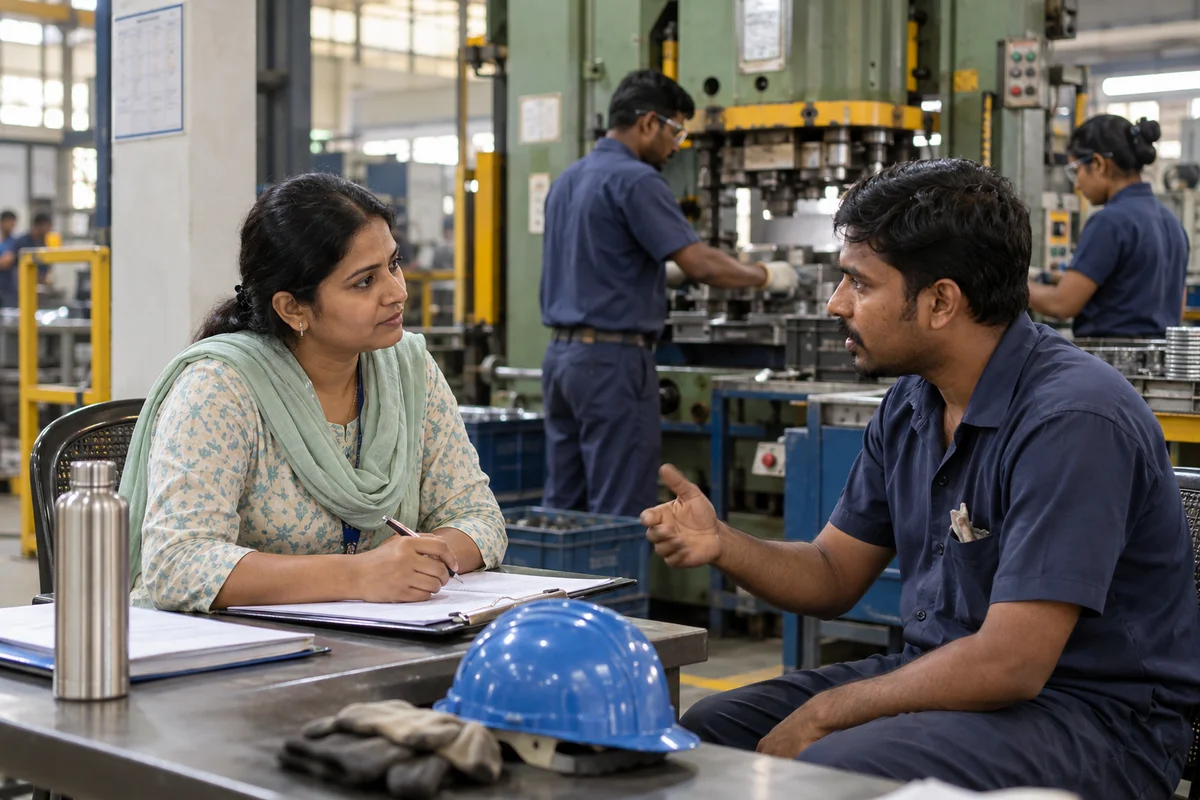
The monthly meeting at a metal parts unit is all tonnage, rejections and receivables. Near the end somebody mentions that the second shift has been short in the paint area, two setters are tired and a grinder operator resigned. The owner nods. A month later the same three things come up again, now with a late order attached.
What should a factory owner check about people each month?
Check shift cover, extra hours, injuries and close calls, skill gaps on critical machines, rework linked to training or handover, leavers and new joiners, pay corrections and open complaints. Split each by shift or area, compare with your own earlier months, and leave with named actions and dates.
The eight lines and where each comes from
- Cover: planned against actual attendance at shift start, from the roster and gate or attendance record, brought by the shift supervisors
- Extra hours: who worked them, how frequently, and whether approved beforehand, from pay inputs
- Harm and near harm: injuries, first aid and close calls, with actions still open, from the floor log
- Critical skills: machines or processes with only one capable person on any shift, from the skill matrix
- Quality tied to people: rework or rejection traced to instruction, handover or an untrained hand, from quality records
- Movement: joiners, leavers and reasons, plus anyone still inside probation, from the people register
- Pay accuracy: corrections made after payment and why, from the accounts person
- Voice: complaints and supervisor concerns still unanswered, from the grievance note
Resist adding more. A line earns its place only if a bad answer would make you do something. If nobody can produce a figure from a record, write "not known" and treat building that record as the first action.
Definitions that stop arguments
Agree once what each line counts, or the hour goes on disputing the figure. Short at shift start means a planned station without a qualified person a fixed number of minutes after the bell. Unapproved extra hours means worked without the named approval, even if later paid. A close call is an event that could have injured someone or damaged a machine. A one-person machine counts per shift, so a second operator who works only days does not cover nights. Write these under the sheet and keep them unchanged unless everyone is told.
Run it in an hour
- 1
Send the sheet beforehand
Each owner of a line fills in this month's figure, last month's and one sentence of explanation a couple of days before. The meeting is for deciding, not for reading numbers aloud.
- 2
Start with last month's actions
Ask what was done and what evidence shows it. Carry an unfinished action forward only with a new date and, if needed, a new owner.
- 3
Take harm and cover first
Injuries, close calls and empty stations come before anything else, so they are never squeezed into the last five minutes.
- 4
Look for the cluster
Ask which shift, area or supervisor appears on several lines. Extra hours, close calls and resignations in the same bay point to one cause worth visiting in person.
- 5
Choose few actions
Pick up to three, each with a name, a date and the sign that will show it worked. Park the rest in writing.
What each answer should trigger
- Repeated gaps at one shift start: speak to the people affected about transport, rota notice and the supervisor, then adjust the roster or cross-train cover
- The same people carrying the extra hours: set an approval limit, train a second person and watch fatigue-sensitive work
- A close call repeating: go to the station, fix the guard, layout or method, and tell every shift what changed
- One capable person on a critical machine: name a learner, a teacher and the shifts they will share
- Rework after changeover: tighten the handover note and first-piece approval before blaming operators
- Early leavers: review what was promised at hiring, the first-week teaching and how the supervisor treated them
- Pay corrections: find which input arrived late or unapproved and move the cut-off or the sign-off
Zero entries deserve a question too. A month with no close calls on a busy press shop floor more probably means people have stopped reporting than that nothing happened. Ask a supervisor for the last thing that nearly went wrong, and thank whoever tells you.
Month:
Plant:

Line / this / last / note

Short at shift start:
Unapproved extra hours:
Injuries:
Close calls:
Safety actions open:
One-person machines:
Rework from handover:
Joiners:
Leavers and reasons:
Pay corrections:
Complaints open:

Worst shift or area:

Action 1 / who / date:
Action 2 / who / date:
Action 3 / who / date:
Last month closed: Y / N
Mistakes that empty the review of value
Do not rank supervisors by their figures in the open. They will learn to record less. Do not compare a foundry with an assembly hall as though their absence and injury exposure were alike. Compare each area with itself over time and ask what changed: a new product, a hot month, harvest or festival leave, a customer pushing volume.
Do not let the owner's visit to the floor drop away because the sheet exists. After the meeting, walk to the area with the worst line, at the shift concerned, and ask an operator what makes the work harder than it should be. Report back to that team on what you decided, including what you will not change and why.
With several plants, hold the headings identical and let each plant head bring one page. Look for a fix from one site that another can borrow, such as a handover board or a rota notice rule.
Once a quarter, step back from the monthly lines. Look at which actions truly changed a figure and which only produced a notice. Check whether the skill matrix still matches the machines you now run, whether a new customer or product has altered the shift pattern, and whether any line has stayed green so long that a better question should replace it.
Where to go next
Fill in the sheet for last month, even with gaps, and book the hour. See the wider picture on our manufacturing HR page. For goals and feedback that grow out of this review, read about the performance management process, and for steadier figures see HR reporting and analytics. If you would like a hand, send us your requirements.