
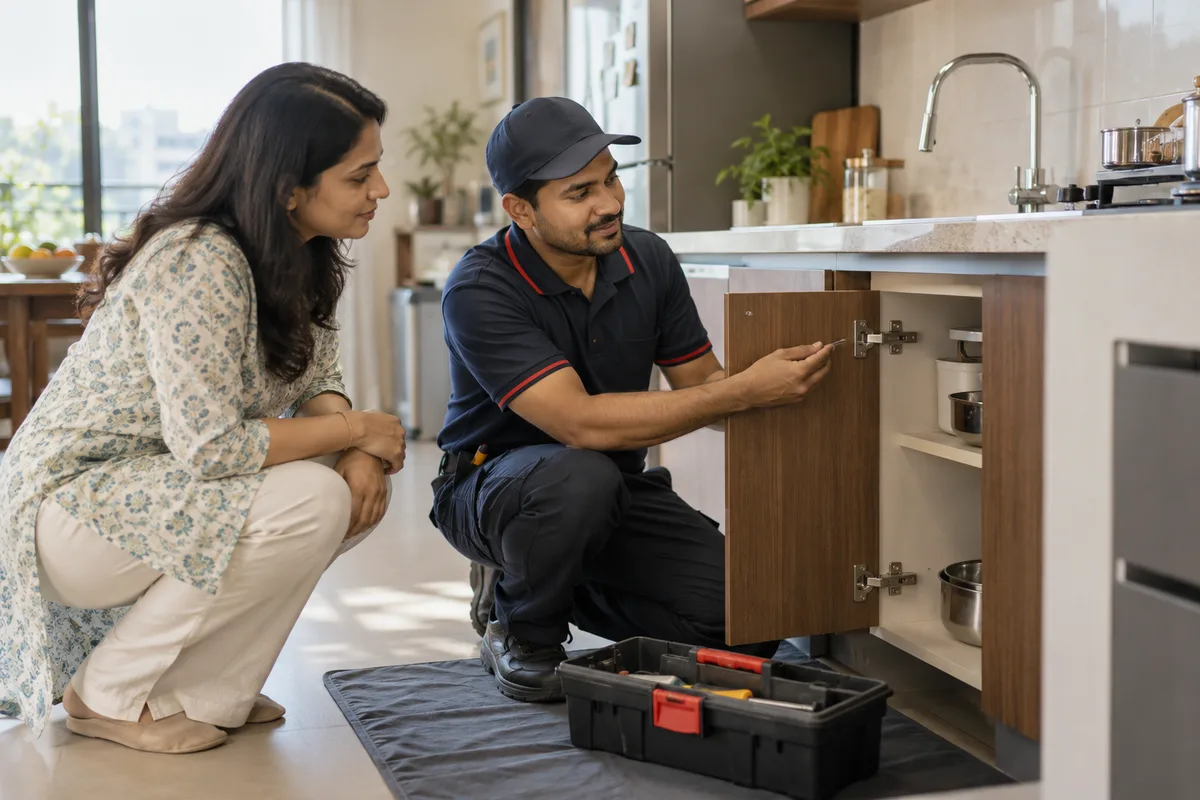
Imagine a compressor fault booked for a restaurant owner's home freezer on a Saturday. Only one technician in the firm can handle it, and that person is across the city with a full route. The coordinator offers Tuesday, and the customer books someone else before the call has ended.
How can a skill matrix reduce reliance on a few technicians?
A skill matrix shows which people can do which job types, and to what level. Once the thin spots are visible, you pair a learner with an expert on real visits, observe the learner working alone and record the sign-off. Dispatch then assigns from evidence instead of memory.
Start from the booking list
Export or copy recent bookings and group them into job types. Keep the groups practical: those a coordinator can recognise from a customer's description. Add the tasks that go wrong even though they sound easy.
- Cooling work: servicing, leak finding, gas charging, compressor and control board faults, installation.
- Electrical work: wiring faults, panels, fittings, load checks and isolating supply safely.
- Plumbing: leaks, fittings, pumps, drain and sewer cleaning.
- Appliances and water purifiers: diagnosis by brand or type, part replacement, testing water after service.
- Pest control and fumigation: inspection, product choice, mixing, application and re-entry instructions.
- Home and deep cleaning: surface identification, chemical safety, machine use and final walk-through.
- Every trade: quoting, explaining the fault, collecting payment, recording the job and handling an unhappy customer.
Define what each level means
Use words that change a dispatch decision. A blank means do not send. L means may attend as a learner with a senior. S means may work alone on standard cases. E means handles unusual cases and can sign others off. Keep licences and brand authorisations in their own column with expiry dates, because skill and permission are different things.
blank: do not send
L learner  S solo  E expert
Job type     T1  T2  T3  T4
AC service   __  __  __  __
Gas charge   __  __  __  __
PCB fault    __  __  __  __
Wiring       __  __  __  __
Purifier     __  __  __  __
Quote talk   __  __  __  __
Licence expiry noted: Y / N
One-person job:
Learner chosen:
Mentor:
Sign-off jobs planned:
Gather honest evidence
Self-ratings drift upward when levels affect pay or job choice. Have a senior watch the job, or review photographs, readings and the customer outcome soon after. Test fault finding by asking the technician to talk through what they would check first and why. Look at repeat visits by job type, remembering that experts receive the hardest calls and may show more returns for that reason.
Transfer skill on real visits
- 1
Rank the gaps
Keep the ranking simple. Ask which one-person jobs lose customers, create safety risk or peak in the coming season.
- 2
Plan the ride-along
Book the learner onto suitable visits with the expert, allow extra time in the route and tell the coordinator not to fill it.
- 3
Hand over in stages
The learner observes, then diagnoses aloud, then works while the expert watches, then works alone with phone support.
- 4
Capture the method
After a good job, record a short checklist, common faults and photographs in a shared place, without customer personal details.
- 5
Sign off and recheck
The assessor notes the date and the jobs seen. Review again after early solo visits and any related call-back.
The quiet season is your training season. Cooling firms can practise before the heat arrives, and pest control firms before activity rises. Short bench sessions on a removed board, a faulty pump or a demonstration purifier let people learn without a customer waiting.
Check that learning reached the customer
A sign-off is a starting point. Look at the learner's early solo jobs for returns, time taken, quotation accuracy and customer comments. Where trouble appears, arrange one more paired visit without treating it as failure. If several learners stumble on the same fault, improve the lesson or the checklist.
Ask the learner what they still hesitate over. A technician who feels safe saying so will ring before guessing.
Share knowledge between formal lessons
Experts carry details no course covers: the water purifier model whose housing cracks when overtightened, the apartment block with an unlabelled distribution board, the drain that backs up from a neighbouring line. Ask for a short note or voice message after unusual jobs, have a senior check it and file it by job type. Set a rule for phone support too, naming who a solo technician rings and when they must stop work and wait.
Win over the experts
An expert may see sharing as giving away their advantage, especially when income follows jobs. Pay or credit mentoring time, protect their earnings on ride-along days and offer a senior or crew leader path that depends on developing others. Be direct that firm records and trained colleagues also give them real leave without calls from the dispatcher.
Plan hiring from the gaps
Some gaps are quicker to fill by recruiting than by training, especially where a licence takes long to obtain. Use the matrix to describe the permanent role precisely: the job types needed solo, the permit required and the work you are willing to teach. Test applicants on those same job types, so their first entry on the sheet rests on evidence.
Helpers are your pipeline. Give each one a short list of tasks to learn on every ride-along, such as isolating supply under supervision, preparing a unit for servicing or laying protective sheets. Review the list with them after a run of visits.
Hidden dependence outside the toolkit
Check the office too. One booking coordinator may know which regular customer needs an early slot, which building refuses entry after dark and which supplier holds an unusual part. Put these into customer notes and a parts contact list, and have a second person run dispatch on planned days.
A defined learning and development process sets who plans training, how sign-off is recorded and when skills are reviewed.
Use it every morning
Show dispatchers the matrix beside the route. When someone gains a level or a licence lapses, change it the same day. A sheet updated only once a year will send the wrong person to the door.
Where to go next
Explore our view of home services and maintenance teams. Pair this work with role design and job descriptions so each grade has matching duties. If you want help setting it up, tell us your requirements.