
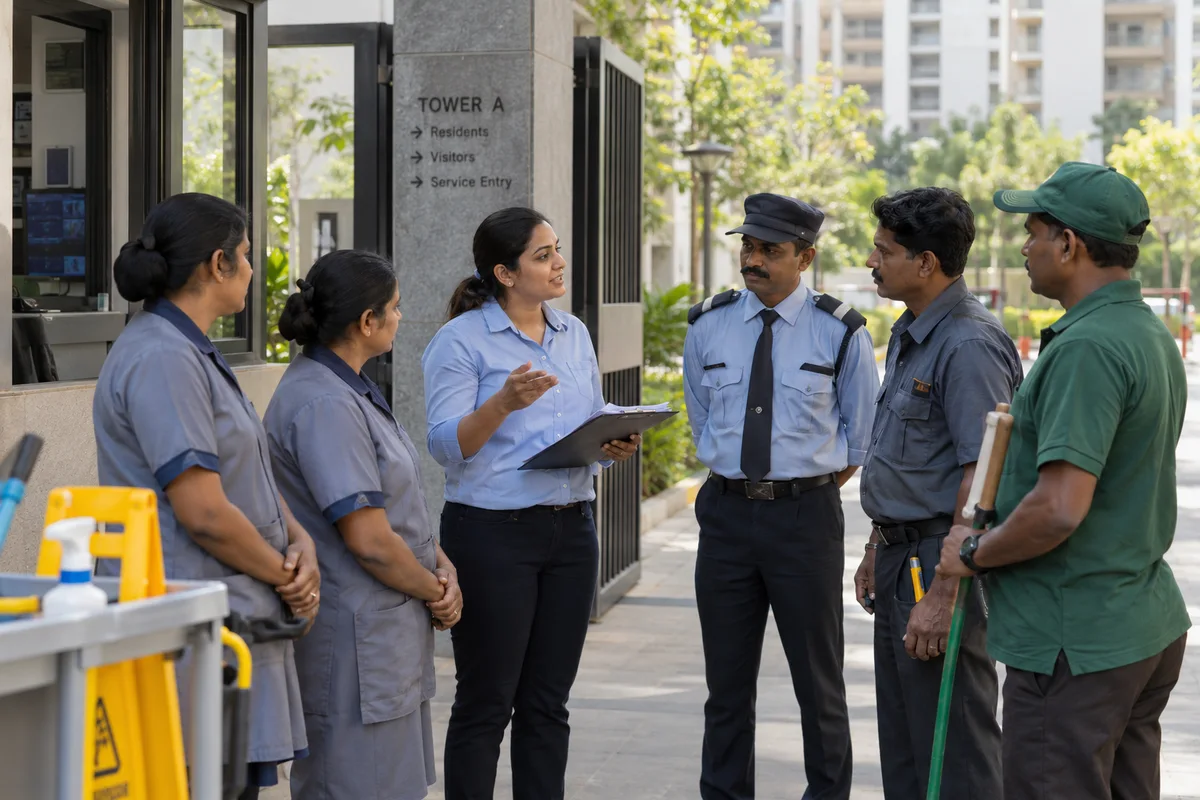
At night a basement sump alarm sounds in an apartment block. The guard rings the technician on duty, who is new to the site, and the one person who knows which valve feeds which tank is on leave with the phone switched off.
How do you build skills so a building does not depend on one person?
For each site, list the critical tasks, mark every person's proven level against them, and check cover on each shift. Where cover is thin, pair a learner with the expert on real rounds, write the site-specific steps down and test them before relying on the result.
Two kinds of knowledge to separate
Trade skill travels with a person: wiring practice, pipe repair, safe chemical use, plant maintenance. Site knowledge belongs to the building: where the shut-off sits, which panel is mislabelled, which tenant's server room must never lose cooling, how the fire alarm is reset and who has the roof key. A well qualified reliever with no site knowledge can still stand helpless. Put both on the matrix.
Choosing the rows
- Water: pump sequencing, tank levels, treatment checks, leak isolation and flood response.
- Power: changeover to generator, fuel checks, panel isolation by authorised people and restoring essential loads.
- Vertical movement: responding to a trapped passenger, calling the lift contractor and taking a lift out of service where permitted.
- Fire and life safety: reading the alarm panel, checking a zone, evacuation roles and recording impairments.
- Cooling and ventilation: plant start and stop, critical rooms and fault escalation.
- Soft services: machine scrubbing, washroom hygiene rounds, waste segregation, spill response and pool testing.
- Client desk: logging, priority setting, visitor and contractor control, move-in handling and monthly site reporting.
Select the rows your building actually has. A mall will add food-court deep cleaning and crowd events; an office park may add tenant fit-out supervision. Ask which tasks someone has rung the expert about outside working hours. Those calls are your honest list.
Levels that include authority
- Aware: knows the hazard, what not to touch and whom to call.
- Guided: performs the task with a qualified colleague present.
- Independent: performs it alone on this site, within permits held.
- Trainer: handles unusual conditions and can sign off another person.
Record levels per site. Independence in one tower does not carry automatically to another with different plant. Add the certificate expiry beside any row that needs one, and treat a lapsed permit as no cover, however experienced the person.
Site: _________ Reviewed: ______
A aware  G guided
I independent  T trainer

Task      P1 P2 P3  Day Night
Pumps     __ __ __  ___ ___
Generator __ __ __  ___ ___
Fire panel__ __ __  ___ ___
Lift trap __ __ __  ___ ___
Cooling   __ __ __  ___ ___
Scrubber  __ __ __  ___ ___
Helpdesk  __ __ __  ___ ___

Day/Night: count of I or T
Zero or one: plan a backup
Permit expiring: ______________
Learner: _______ Task: ________
Trainer: _______ Check: _______
Closing a gap
- 1
Rank the exposed rows
Put life safety, water, power and trapped passengers ahead of finishes and reporting. Cover the shift with nobody first.
- 2
Walk and write
Have the expert and learner walk the system together. Photograph valves and panels, label what is unlabelled and write the steps and stop points on one sheet.
- 3
Pair on real rounds
Roster the learner beside the expert for scheduled checks and contractor visits, with the learner doing more each time under supervision.
- 4
Drill safely
Ask the learner to talk through a night fault at the equipment, using only the sheet. Correct the sheet wherever they get stuck.
- 5
Sign off and rotate
A trainer records the level, and the roster then gives the learner the task regularly so it stays usable.
What the site sheet should hold
Keep each sheet to one side of paper per system so it can be read by torchlight. State what normal looks like, the first safe actions, the points at which to stop, the people to call in order and where the keys and tools are. Name the location in words a new reliever will recognise, matched to the labels on the equipment. Leave out access codes and other secrets; hold those in a controlled place with a named custodian.
- Date every sheet and record who checked it against the equipment.
- Update it after contractor work, replacement parts or layout changes.
- Keep a printed copy at the plant and a shared copy for the area manager.
- After every real night call, ask what the sheet failed to answer.
Soft skills belong on the matrix too. A building manager who alone can calm a difficult committee, or a coordinator who alone knows how the monthly client report is assembled, is the same risk in a different room. Let a deputy lead part of a meeting or prepare the report with review, and record the level honestly.
Getting experts and clients on side
A long-serving technician may feel that written valve maps make them replaceable. Be direct: you want them able to take leave without midnight calls, and teaching counts toward a senior grade. Give protected hours for it. Tell the client that paired rounds have a cost and a purpose, and agree whether the contract carries it. A client who has lived through one unanswered alarm will listen.
Check relievers as well. List the sites at which each floating technician is independent, and plan familiarisation shifts before the holiday season rather than during it. When a contract is gained, schedule knowledge handover from the outgoing team if the terms allow, and collect drawings and logs. More on site staffing is on our property and facility management page.
Treat a real incident as a test of the matrix. After a flood, a trapped passenger or a power failure, ask who was called, who arrived, whether the person marked independent could act and what the site sheet lacked. Adjust the level or the sheet while memories are fresh, without turning the review into a search for someone to blame.
Where to go next
Fill in the matrix for the site that worries you most and count night cover for water, power and fire. If training needs a proper rhythm across buildings, read about our learning and development process work or share your requirement.