
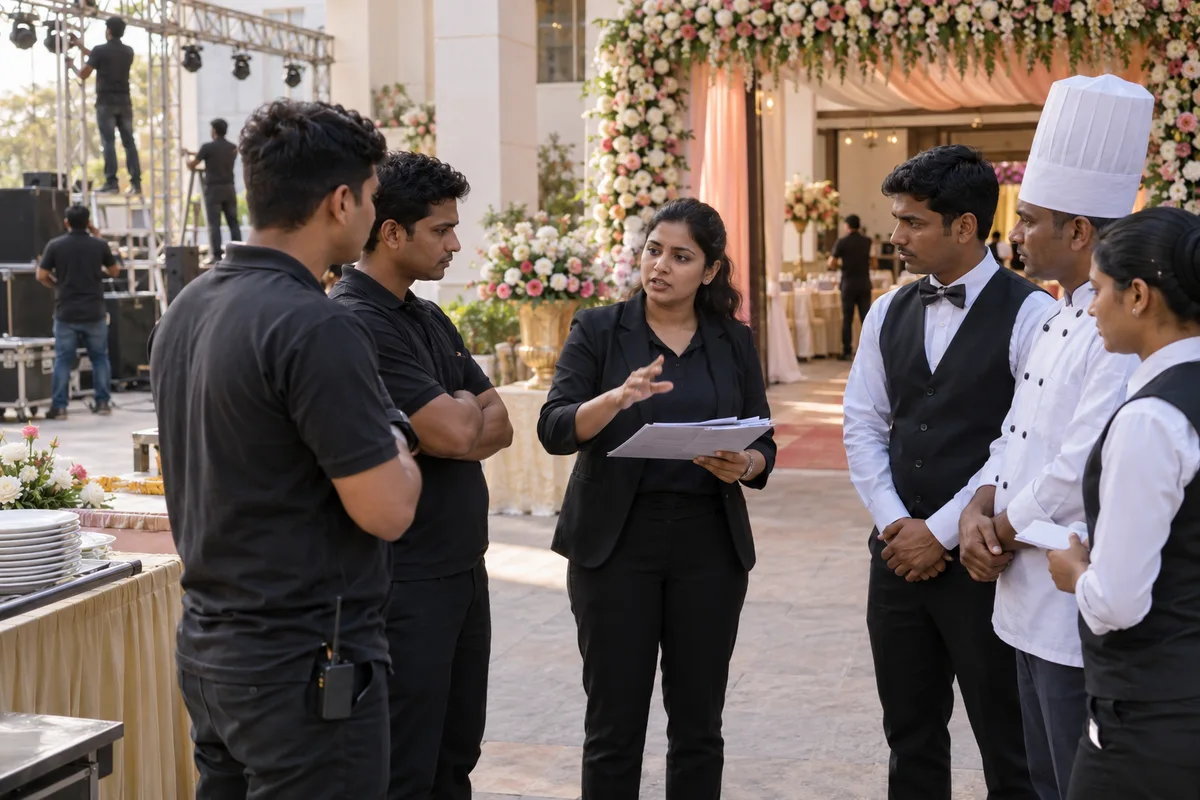
A hypothetical exhibition organiser needs eight registration hosts for Friday. The supervisor who always supplies them is booked elsewhere, a new contact sends strangers, and two of them have never handled a badge printer or an angry exhibitor.
How do event firms find people and test them before hiring?
Draw from past crew, referrals, hospitality and media courses, technical trades and a standing open call, and fill the bench before the calendar does. Then test the real task: a client change for planners, a guest desk for hosts, a supervised practical for technicians. Write what you observed, what they are cleared for and any limit.
Two hiring problems, two searches
Hiring a coordinator who will stay is not the same as booking fifty hands for one night. Handle them separately.
- Planners and coordinators: former assistants, hotel banquet and conference staff, travel desks, student volunteers who ran a college festival well, and referrals from venues and vendors.
- Sales and account roles: people who have sold stalls, sponsorships, hotel packages or venue space and can follow up without overpromising.
- Designers and set builders: design and craft courses, theatre workshops, fabrication shops and portfolios of built work, with their own part clearly stated.
- Technicians and riggers: rental houses, theatres, broadcast and electrical trades, and training providers recognised for the task.
- Hosts, marshals and runners: past crew, hospitality students, trusted supervisors' contacts and your own open registration form.
Ask good crew for referrals after an event, while the work is fresh. Ask each supervisor to bring in at least a couple of new people under supervision across the quieter bookings, so the bench grows when mistakes are cheaper.
Say what the work is really like
An honest description saves a no-show. State early calls and late breakdowns, standing time, lifting, outdoor heat or rain, travel to destination functions, dress, phone use, tips and gifts, and when pay arrives. For permanent planners, say plainly how weekends cluster in season and what rest follows. Ask applicants which dates they already hold.
Tests that match the role
- 1
Planner: the late change
Give a floor plan, a vendor list and a budget. Say the client has added a row of guests and the ceremony has moved earlier. Ask for the order of calls, what costs more and what must be agreed in writing.
- 2
Coordinator: the written handover
Ask for a run sheet from rough notes. Check times, owners, contacts and the things they flagged as unknown.
- 3
Host: the guest desk
Play a guest whose name is missing from the list. Look for courtesy, privacy and a correct escalation instead of a guess.
- 4
Marshal: the blocked exit
A family wants to place chairs across a fire route. See whether they hold the line calmly and call the site lead.
- 5
Technician: the practical
A competent person watches cable routing, load checks, console setup or fault finding, matched to the clearance required.
- 6
Sales: the client call
Ask them to answer a request you cannot fully meet. Listen for an honest limit and a clear next step.
Keep exercises short and respectful of the applicant's time. Do not ask candidates to produce a full event concept that you then use for a client. If a longer trial is needed, agree its terms and pay in advance. A recruitment process for permanent roles also settles who interviews, who decides and how quickly applicants hear back.
CREW BENCH CARD
Name: ______________________
Phone: _____________________
Referred by: _______________
Roles offered: _____________

Task tested: _______________
Tested by: _________________
Seen to do: ________________
Not yet cleared for: _______
Certificates and expiry: ___
Travel to other towns: y / n
Season dates blocked: ______

After each event
Event: _____________________
On time: yes / no
Supervisor note: ___________
Book again: yes / with leadMark the test before you meet the person
Decide what a good answer contains while nobody is in front of you. For the late change, a strong planner asks who has authority to approve extra cost, protects safety and the ceremony timing first, calls the vendor with the longest lead and confirms in writing. A weak answer promises the client everything and sorts out the money later. For hosts, a strong answer never reads another guest's details aloud and fetches the lead when the list is wrong.
Use two assessors for permanent hires where you can, such as a lead planner and the operations head. Compare notes before discussing salary. If the applicant shows a portfolio, ask what they personally decided, what went wrong and who else did the work. An honest account of a failed vendor or a missed cue is more useful than a gallery of finished stages.
References and early bookings
For roles that handle cash, gifts, client contacts, equipment or guests' rooms, speak to someone who has supervised the person, with their consent. Ask what the person was left in charge of. Then book new crew beside an experienced lead on a lower-stakes function. Raise their clearance only after the supervisor's note supports it. Tell the lead beforehand that they are assessing, and what to watch: arrival, listening at the briefing, behaviour when plans change and whether the person stays until released.
What not to bother with: long personality questionnaires for day crew, interviews that reward fluent talk over calm action, and a bench list nobody updates. Remove or mark people who have moved away, and let anyone ask what you hold about them.
Keep the bench warm between peaks
A tested worker who hears nothing for months will belong to someone else by the season. Share likely dates early, saying clearly that they are provisional, and confirm or release them by an agreed point. Offer quieter bookings and paid setup days to the people you want to keep. Pay on the date promised. Pass on a supervisor's praise.
For permanent roles, tell candidates where they stand after each stage and make the offer in writing with duties, season expectations, travel, rest arrangements and notice. Plan the new person's first event beside a named senior before they accept, so their start is not an unsupported weekend in the busiest week of the calendar.
Where to go next
Choose the role you scramble for most and book two bench tests before the next busy run. Our event management and wedding services page covers related issues, and you can tell us which roles you need for permanent hiring support.