
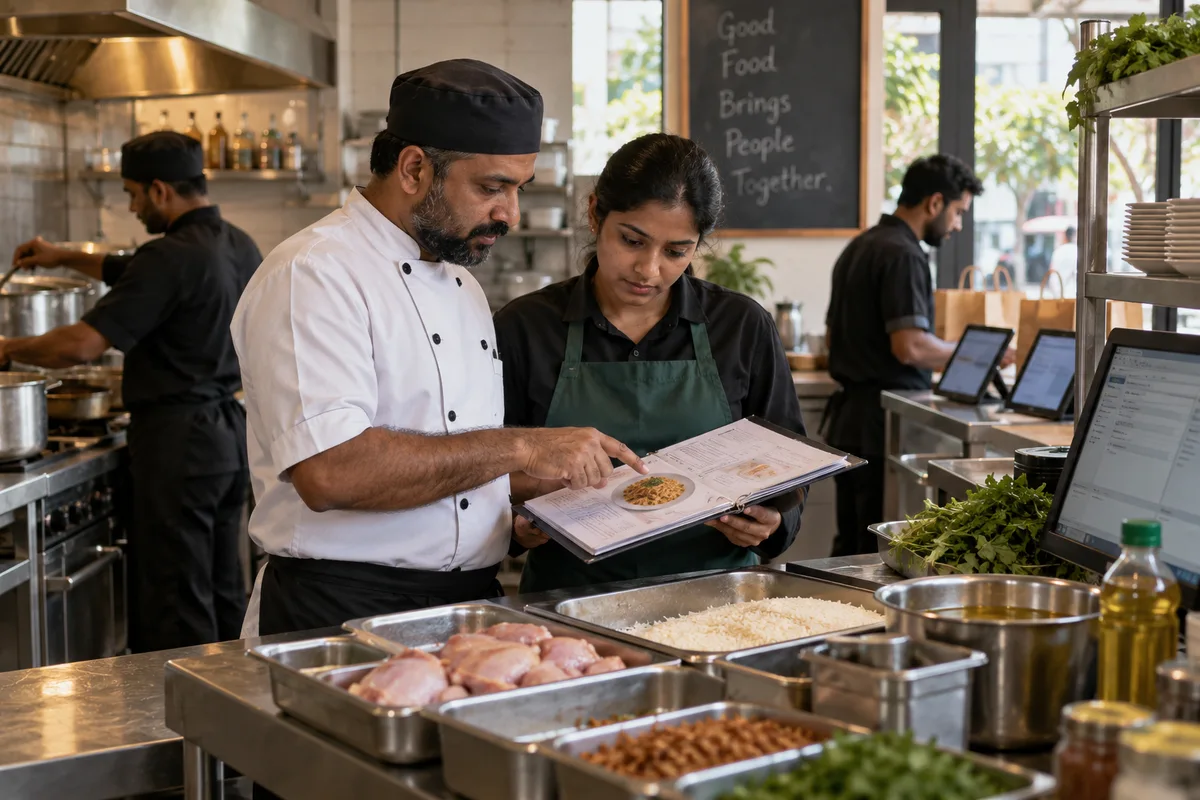
The head baker takes a week off for a family wedding. By the second morning the sourdough is tight and pale, a regular asks whether the recipe has changed and the shop manager finds a page of weights in a drawer that nobody has followed in years. The bread on the shelf is made by the same ovens and the same flour.
How do you get a senior baker's skill into the rest of the team?
Pick your most important products, watch them being made and write method cards that include the judgements, not only the weights. Then have a named learner make each one under supervision until the result matches. Schedule that practice inside the working week, and record who has been signed off to run what.
A recipe is the smallest part of what the senior baker knows. They adjust water when the flour delivery changes, hold the proof longer on a cold night and pull a tray early because one side of the deck runs hot. None of that is in the drawer. It comes out only when someone stands beside them and asks why.
Choose what to capture first
Do not try to document the whole counter. List every product and mark three things: how much trade depends on it, how hard it is to get right and the number of people who can make it today. Begin with those that score high on trade and difficulty and have only one maker. In a small shop that is perhaps the signature loaf, the laminated pastry and the sponge base behind celebration cakes.
Be open with the senior baker about why. A person who thinks their value is being copied out so they can be replaced will leave the key detail unsaid. Name them as the teacher, give them time for it, and recognise that role in their title or pay.
Write cards that capture judgement
The learner or a manager should do the writing while the baker works, then read it back. Photographs of correct and faulty dough save paragraphs.
PRODUCT:
Batch size:
Weights (flour, water, other):
Allergens:
Dough temperature target:
Mix: speed and time
Ready when it feels:
Bulk rest: time and place
Cold night: change what?
Hot day: change what?
Proof test: how to judge
Oven, deck, temperature, time:
Done when:
Common faults and fixes:
Card checked by:       Date:
Test every card by handing it to someone who has not written it. Where they stop to ask a question, the card is missing a line.
Teach in stages, during real shifts
- 1
Watch and explain back
The learner weighs and observes, then describes each stage and its signs in their own words.
- 2
Do one part
They take over a single stage, such as mixing or shaping, across several shifts while the senior baker judges the result.
- 3
Run it with support
The learner makes the whole batch. The teacher stays nearby and steps in only when asked or when food safety requires.
- 4
Run it alone
The senior baker checks the finished product against the agreed sample and signs the learner off.
- 5
Keep it warm
Put the new maker on that product at planned intervals, including one festival or weekend batch.
The last step is the one bakeries skip. A sign-off that is never used again fades, and the first real test arrives on the busiest morning of the year. Write the practice shifts into the roster as you would a delivery.
Expect a spoiled batch or two. Decide beforehand which quieter days are used for learning, what happens to imperfect bread that is safe to sell or share, and that a learner who reports a mistake early has done the right thing. A learning and development process turns these cards, stages and sign-offs into something a second shop or central kitchen can repeat.
Let the oven teach, and write down what it says
Keep a short batch note for each key product while people are learning: flour lot, dough temperature, proof time, who made it and how it came out. When a loaf is wrong, the note lets the teacher and learner find the cause together instead of arguing from memory. Compare against a photograph of the agreed sample, cut open to show the crumb. After a few weeks the notes show which stage each learner struggles with and which line on the card is still too vague. Update the card the same day and date it.
Show helpers a way to the dough
A helper who has cleaned tins for years with no word about what comes next will start a small bakery of their own, or join one. Publish a short ladder with the tasks needed to move up:
- Helper: hygiene, weighing, tins and trays, safe cleaning of machines.
- Dough hand: signed off on mixing and shaping named products.
- Oven operator: loading, baking and judging colour and crumb.
- Baker: runs a full shift's range and adjusts for flour and weather.
- Senior baker: teaches, corrects cards and trials new lines.
Say when you will review progress and what each level means for duties and pay. Promise opportunity to learn, and do not promise a title you may have no room to give. Cake decorators and finishers need their own short ladder, since piping and finishing are a separate craft.
The next two things
First, put the festival and wedding calendar on the wall well ahead. Decide which products you will pause, which learners will take on which batches and when temporary help can safely do packing so bakers stay on dough. Training does not happen in peak week, so it has to be finished before it.
Second, give production and counter a few minutes together at the morning handover: what was baked, what is short, what customers asked for and which complaint needs the baker's eye. Counter staff are your earliest warning that a loaf is drifting. See HR for bakeries for the wider picture of grades, peaks and shifts.
What not to bother with yet
Skip long online courses, thick manuals and formal exams. A stack of tested cards in sleeves near the bench, a sign-off sheet and a protected practice shift each week will do more than any of them.
Where to go next
Ask your head baker on Monday which product nobody else could make today, and book the first observed batch. If you would like help building the training stages and the helper ladder, tell us your requirements.