
Recruitment process consulting for Environmental Laboratories: hiring analysts and samplers who stay
A lab hires graduates who must be trained, and field staff who must be reliable. The search should test both skill and willingness to stay.
Not sure what you need? Tell us about your business in six short steps and we will come to the first meeting prepared.
Share your requirementsWhy recruitment process consulting matters in environmental laboratories
Some labs recruit by posting a vacancy and picking from graduates who respond. Academic marks tell little about careful bench work, patience with records or comfort with field days. A hire who joins and leaves within a year costs months of training, and a poor sampler can undermine a good analyst's work.
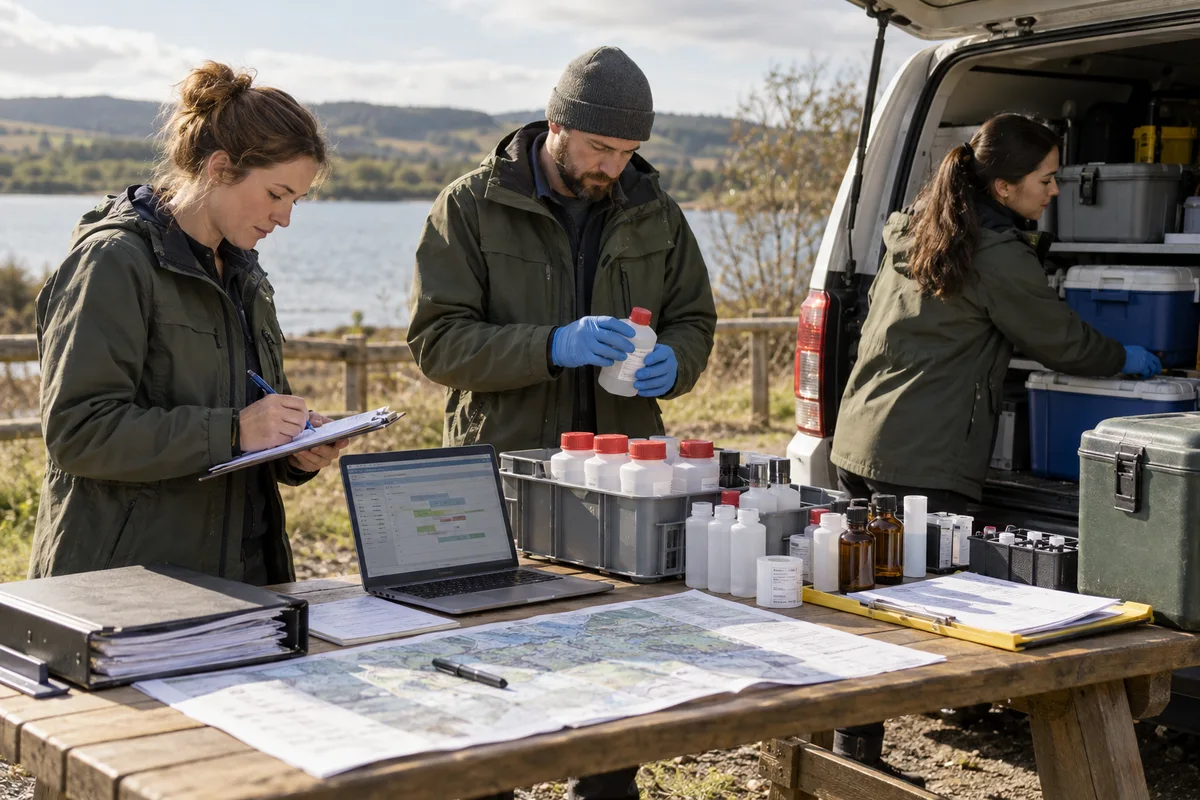
A practical recruitment routine adds a short bench exercise for analysts, a field day trial for samplers and a conversation about growth for both. It also describes the career honestly, so people who want a steady path in testing apply.
Some labs work towards accreditation, which depends on trained, documented staff. A hire who cannot follow a method exactly, record honestly or handle instruments carefully creates retesting and client complaints. Hiring needs to look at habits of documentation as much as chemistry knowledge.
How to set it up
1. Write what the role needs
List the methods, instruments, field conditions and hours of the role. State the career path too. Use job descriptions for the formal version.
2. Source beyond job boards
Contact colleges, local chemistry departments, former interns and other labs' former staff. Ask your own analysts for referrals.
3. Run a practical exercise
Give candidates a short bench task such as preparing a sample or recording a reading, and check care, method and honesty about errors.
4. Trial the sampler on a field day
Take the applicant on a real or practice sampling trip, and observe labelling, handling and attitude to early starts.
5. Close the loop
After joining, review at one, three and six months with the manager and note what the search missed.
6. Test record keeping
Give candidates a sample logbook page with a deliberate error and ask what they would do. Honest answers about corrections matter more than speed.
7. Plan the first months of training
Before the offer, name who will train the new analyst on each method and instrument, so the candidate sees a real path and you see the load on seniors.
Check these first
Before changing anything, find out what is true today. Use your own records for a defined period and note gaps in the evidence. The review may take longer if records are incomplete or spread across teams.
- Count analysts who left within two years and where you found them.
- Ask recent joiners what the interview did not tell them.
- Check whether any applicant did a practical task before being hired.
- Review how long a technical vacancy stays open.
- Ask your quality manager which recent errors came from newer staff and what the hiring process could have shown.
GullyHR can do this with you. Read how we approach recruitment process consulting in general, or share your requirements and we will tell you where to start.
Questions owners ask
Both have a place. Experienced hires bring speed, graduates can be shaped and may stay longer if there is a path. Decide per role and plan training for either.
Observe on a field day, ask for examples from past work and check a reference. Look at how they handle labelling, travel and early starts.
Look for technical depth, the ability to review other people's work and comfort with clients. An internal candidate with preparation may suit better than an outsider.
Yes, if you can supervise them early. Look for willingness to travel, early starts and care in labelling. Pair each fresher with a steady senior for the first field trips.
Show a clear step from trainee to analyst to reviewer, share project exposure and review pay when new methods are signed off. Ask leavers what pulled them away and adjust.
We set up the interview and hiring process for environmental laboratories
Every business interviews, but few have a written process that works the same way for every role and every interviewer. GullyHR designs yours, from the role brief to the offer, trains your managers to run it, and can run it for you on the roles you hand us.