
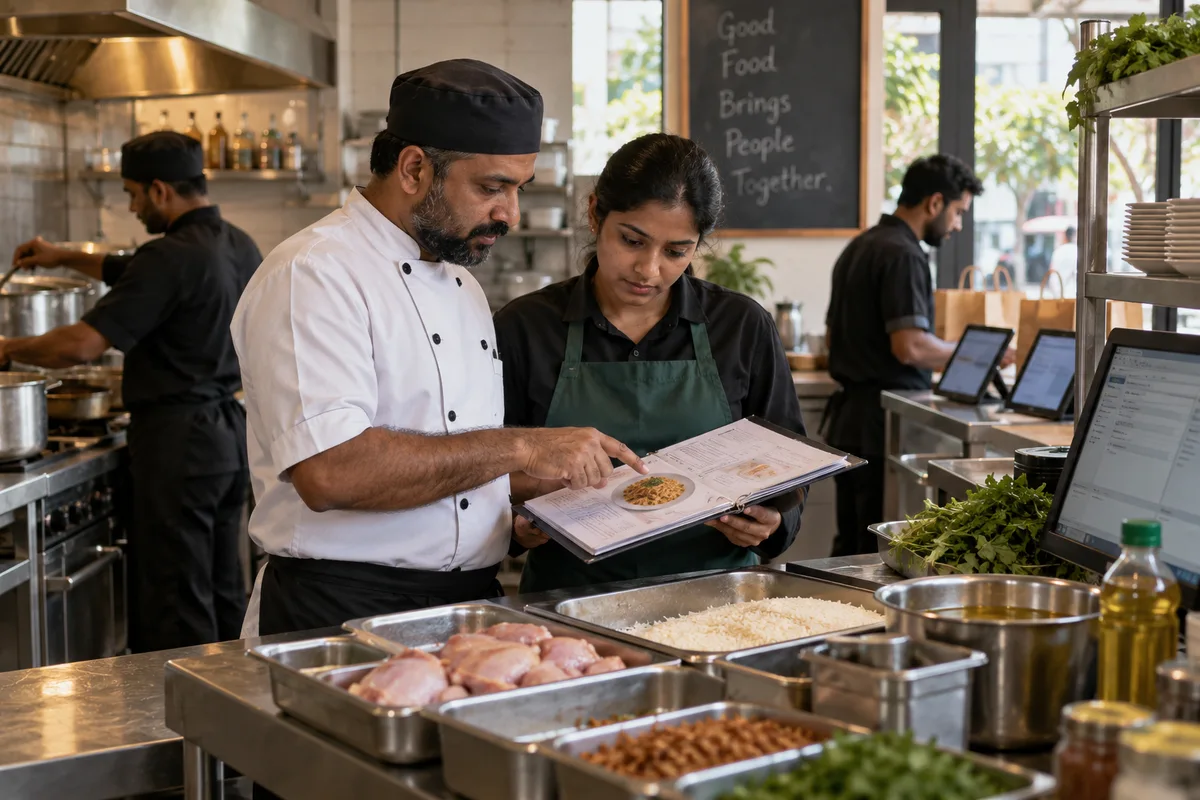
It is the thick of Friday evening, with tickets curling off the printer. The wok cook shouts for chopped onion, the counter person is packing between phone calls and two riders crowd the hatch. One bag goes out without its bread and another with a neighbour's curry, and both come back as refunds and a review that mentions the shop by name.
How should a small takeaway manage performance during the rush?
Fix who does what, put one check between the kitchen and the door, record why orders fail and talk about it briefly after the shift. Measure stations before individuals. With a crew this small, a clear duty and prompt, fair feedback will do far more than a scoring form.
Performance management sounds like something for a firm with departments. In a takeaway it is simply agreeing what a good Friday looks like, seeing whether it happened and helping people get there. The owner who only speaks up when a refund arrives teaches the team to hide mistakes.
Set the stations for the busy hours
Draw the kitchen on one sheet and put a name on each position for the peak. Keep the roles narrow enough to hold in your head:
- Hot station: cooks in ticket order and calls out any item running short.
- Prep: keeps trays filled before they empty and restocks containers.
- Packer: assembles one order at a time against the ticket.
- Checker: counts items, reads special requests, seals and labels the bag.
- Counter: takes orders, quotes realistic waits and manages the hatch.
- Shift lead: moves people, pauses an app channel if authorised and decides remakes.
In a crew of three, one person holds several roles, so say which wins when two collide. If the counter person is also the checker, the phone must have a second pair of hands or the check disappears at exactly the hour it matters.
DATE:        LEAD:
Hot:         ______
Prep:        ______
Pack:        ______
Check:       ______
Counter:     ______
Riders:      ______

Prep full before peak:    Y / N
Who covers phone:         ______
Who may pause orders:     ______

AFTER THE RUSH
Wrong ___ Missing ___ Spilt ___
Late ___  Remakes ___
Main cause:
One change next Friday:
Thank:
Make the packing check real
A check works when it has an owner and a physical place. Give the checker a clear shelf where unchecked bags cannot be reached by riders. They read each line of the ticket aloud or tick it, look at allergy and special notes, close the lid properly and sign or initial the label. A bag without the mark does not leave.
Log causes for a fortnight
- 1
Capture
For each refund, remake or complaint, note time, item, channel and what went wrong.
- 2
Trace
Decide whether it began at order entry, cooking, prep supply, packing, checking or the road.
- 3
Group
At the end of the week, count by cause and hour. Find the largest repeat.
- 4
Change one thing
Move the sauce tubs, prepare a side earlier, change the ticket layout or add a helper for the peak.
- 5
Look again
Compare the following week, allowing for busier or quieter nights, and keep or drop the change.
Check the log against the delivery apps once a week, so that complaints lodged there and never phoned through are counted too. Keep the paper beside the packing shelf, where filling it in takes a moment and everyone can see what is being recorded.
An app may blame the shop for a rider's delay. Note packed time and collected time on the ticket so you can see where the minutes went before anyone is criticised.
Decide the remake before it happens
Half the shouting on a busy night is about what to do next. Agree who may promise a remake, a refund or a replacement item, how the remake ticket is marked so it jumps the line without burying other orders, and who phones the guest. Agree too when the lead stops taking new orders for a few minutes, and what the counter says to a caller. Written once and stuck beside the printer, these decisions leave cooks free to cook and spare the newest person from guessing under pressure.
Give feedback the crew can use
Nobody learns while a queue is waiting. During the rush, the lead gives short instructions about the next order. Afterwards, spend a few minutes while cleaning starts: what jammed, what worked and one change. Thank a person for a specific act, such as spotting a missing side before it left.
Once a month, sit with each person privately. Go through their two or three duties, what gets in their way and what they want to learn, perhaps the second cooking station. If the same fault continues despite a working check, clear instruction and practice, agree an improvement with a review date. A simple written performance management process keeps this consistent between supervisors and stores.
Recognise the heavy nights carefully
A flat wage makes a packed Friday feel like a penalty for being good. Recognition could be first choice of a rest day, a shared meal or a small team payment linked to accurate orders across the busy shifts. Reward the team, because speed bought by one station is paid for by the next. Avoid targets that push food out before it is cooked or riders out in a hurry.
Then the hatch and the closing hour
Agree a handover routine: riders wait in a marked spot, the checker calls the order number, the rider confirms it and the collected time is noted. Nobody argues with the cooks across the counter; delays go to the lead.
Then plan the close. Set the last order time, begin cleaning stations that have gone quiet, share the final tasks by rota and ask each person how they get home. Staff stuck late every night will not care about your scores for long. A second cook trained on the core menu also stops one absence cutting it. See HR for takeaway restaurants for more on staffing a small kitchen.
What can wait
Rating scales, annual appraisal forms and league tables of staff can all wait, perhaps for good. So can screens and timers bought to watch people. Start with the station card, the checked shelf and the cause log, and add only what answers a question those cannot.
Where to go next
Fill in the station card before this Friday and spend ten minutes on it after close. If you want help writing duties, review routines and a fair incentive design, tell us your requirements.