
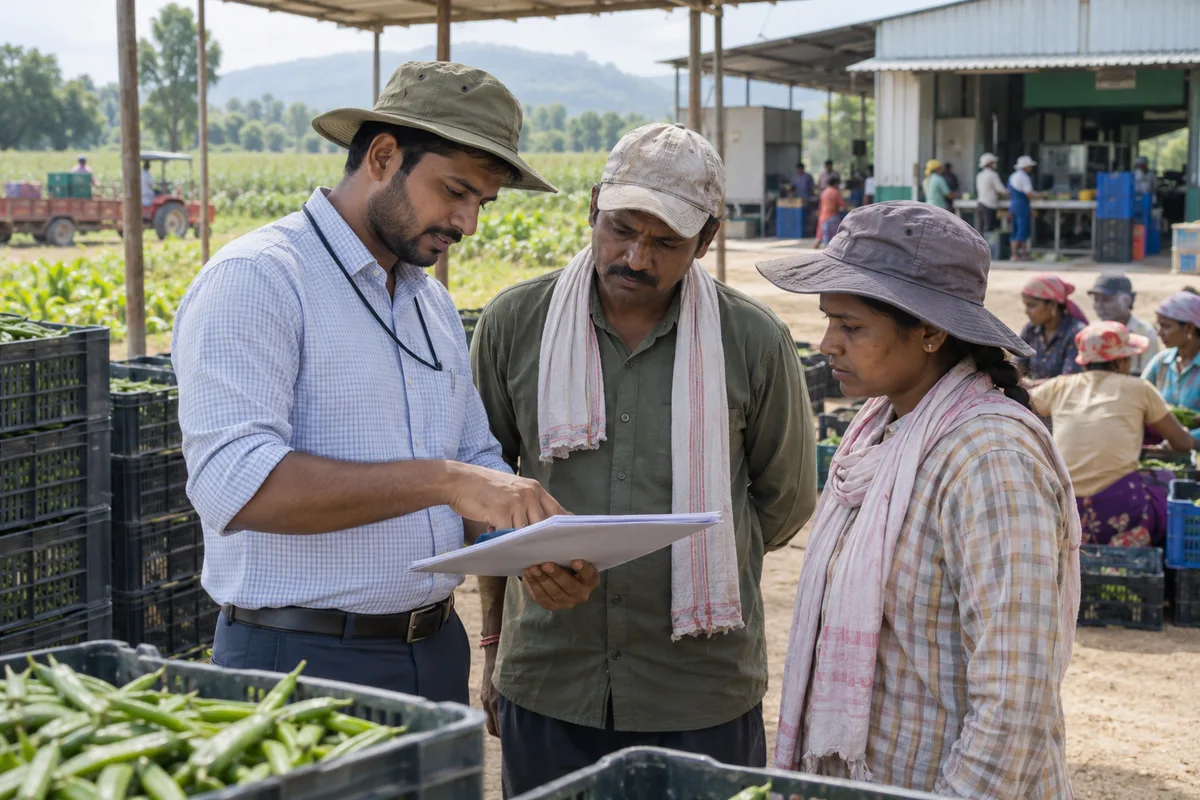
A new cattle attendant arrives on a Monday after a long bus ride. By Wednesday evening the attendant has seen the early milking, the shared room and the distance to town, and asks for travel money home. The interview had covered experience with cows and very little else.
Where do you find farm and pond staff, and how do you test them?
Look through current workers, nearby villages, former seasonal hands, agricultural, veterinary and fisheries training bodies, and vetted contractors. Screen first for willingness to live the duty pattern. Then watch a short supervised trial on real tasks, scoring hygiene, observation, handling and honesty in reporting, and record the result before offering work.
Say what the job is really like
Write one page per role before you ask anyone to send names. Include the start of the earliest shift, night and holiday duty, rest days, smells, wading, lifting, cold-room work, how far the site is from shops and schools, what the room looks like, who cooks, the pay and pay day, and any restriction on keeping birds, animals or fish at home. Photos help. People who decline after reading it have saved you a failed week.
Match the source to the role
- Feeders, shed hands, netting crew: referrals from steady workers and local contacts. Thank the referrer in a stated way, and judge the newcomer on the same trial as anyone else.
- Milkers and herd attendants: neighbouring dairy households and workers from smaller herds. Check what machine or hand milking experience they hold.
- Hatchery and nursery technicians: training institutes, internships, suppliers' contacts and promising shed staff you can develop.
- Pond supervisors and aerator operators: people already working in culture areas, with practical knowledge of water behaviour.
- Graders, peelers, filleting and packing hands: nearby communities and labour contractors, with your own checks at the gate.
- Veterinary assistants and farm managers: professional networks and direct search, with a visit to the site before any offer.
Be careful when hiring from a neighbouring farm. Ask about recent contact with other flocks, herds or ponds and follow your expert's advice on any gap before entry. Never accept a recruiter who charges workers a fee you do not know about, holds their documents or lends money that binds them to your site.
Plan ahead of the cycle
Vacancies on these sites bite hardest around chick placements, calving and kidding periods, pond stocking and harvest, and processing peaks. Mark those on a calendar and open the search early enough for a trial and a briefing beforehand. Keep a returners book with each past worker's name, tasks they handled well, contact number and when they could come again. A person who left on good terms is far cheaper to assess than a stranger, though entry rules and a fresh safety briefing still apply.
Screen by phone before they travel
Ask what they did on a normal morning at the last place. Someone who has done the work describes sequence and detail: which pen first, what the droppings or the water surface told them, whom they called. Ask when they can stay on site, what family arrangements they need and what ended earlier jobs. Confirm who pays for travel if the trial does not lead to work.
Run a supervised trial on real work
- 1
Prepare a safe trial
Choose a low-risk area. Brief hygiene and hazards first, provide protective gear and assign one trained worker to stay beside the candidate. Agree payment for trial time in advance.
- 2
Show once, then watch
Demonstrate a task such as cleaning drinkers, weighing feed, teat preparation, checking a pond tray or sorting by size. Ask the candidate to repeat it while explaining.
- 3
Plant an observation
Point the candidate to a pen or tank and ask what looks normal and what they would report. You are testing attention and honesty, not diagnosis.
- 4
Test the instruction habit
Give a two-part instruction involving a measure or record. Check whether they ask when unsure rather than guess.
- 5
Decide and tell
The supervisor and manager compare notes soon after. Offer, decline or arrange a further check, and tell the person plainly.
Candidate:
Role:           Site:
Date:           Watched by:

Mark: Y yes  P partly  N no

Followed entry hygiene      [ ]
Wore gear correctly         [ ]
Handled stock calmly        [ ]
Measured feed or dose right [ ]
Noticed something unusual   [ ]
Asked when unsure           [ ]
Finished cleaning properly  [ ]
Recorded figures honestly   [ ]

What they did well:
Training needed first:
Safety concern:
Accepts duty pattern: Y / N
Housing explained: Y / N
Decision:
Reason:
Adjust the test for senior and technical roles
Ask a hatchery technician to walk you through an incubator log and say what they would check if hatch results slipped. Give a prospective pond supervisor a set of water readings and ask for the next actions, including what they would not do without advice. A farm manager should build a week's roster with one absence in it and explain a past loss without blaming everyone else. For a processing lead, observe how they correct a worker whose hygiene lapses.
Warning signs worth a second look
- Confident talk about experience but no detail about a daily round.
- Impatience with hand washing or footwear changes during the visit.
- Reluctance to say a reading or count was missed during the trial.
- Rough handling when the candidate believes nobody is watching.
- A recruiter who answers every question on the worker's behalf.
None of these proves a poor hire on its own. Raise it, listen to the answer and watch again. Nerves, language and unfamiliar equipment can make a capable person look unsure, so let an interpreter or a worker who shares the language explain the task. Judge the work, and apply the same marks to a referral from your best employee as to someone from the road.
Write down the promise
Put role, site, pay, shift pattern, rest, housing, food, deductions, probation and notice into writing, with the first training tasks and the person who will teach them. A short recruitment process keeps these steps the same across supervisors, and a structured onboarding and probation routine carries the trial notes into the first weeks.
Where to go next
Pick the role you fill most, write the honest job page and try the scorecard with your best supervisor. Our poultry, livestock and fisheries page gives more background. To discuss permanent hiring for your sites, send us your requirements.