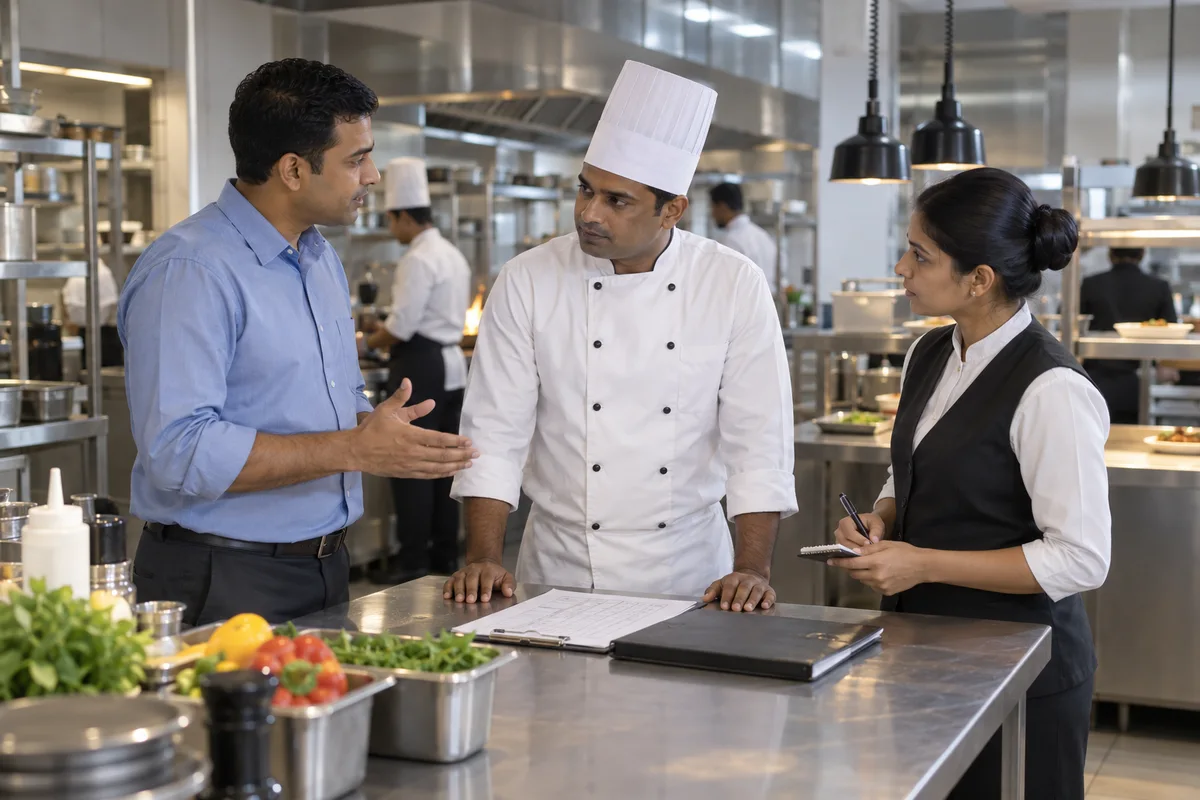
At a wedding venue, the buses are late and the day crew walk straight into set-up. A loader nobody has met connects a gas cylinder behind the live counter, a new server carries cut fruit after handling crates, and the captain is at the gate arguing about parking.
How do you brief a crew you met this morning?
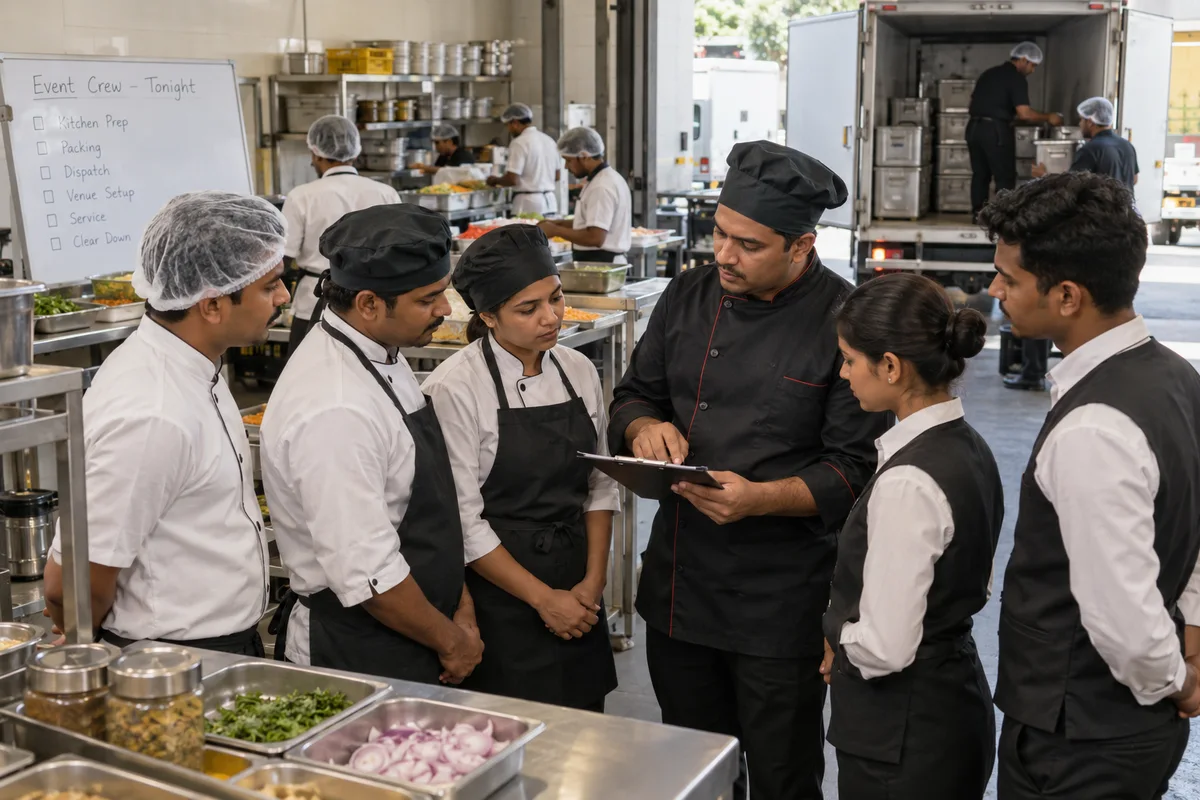
Name one lead for food and safety at each event, give a short spoken briefing for each task group at call time, and have people show the key actions. Allow only briefed and competent people near gas, hot oil and ready food. Write down who attended, what was covered and anything that went wrong.
Trying to train every possible helper in a classroom before the season does not fit how crews are formed. A repeatable briefing travels with the event. It sits on top of fuller training for your core cooks and captains, who carry the standard when the owner is at another function.
Sort the risks by where they happen
- Central kitchen: knives, grinders, hot oil, steam, wet floors, handwashing and cooling of cooked food
- Loading and road: heavy vessels, ramps, secured loads, holding temperature and a rested driver
- Venue set-up: gas lines and cylinders, extension cables, uneven ground, tents and open flames near fabric
- Service: ready food, serving utensils, reheating, allergen questions, children near counters
- Clear-up: hot water, broken glass, waste, leftover food and tired people lifting late at night
Ask the head chef and an experienced captain to add the near misses they remember. Those stories make better teaching material than a general poster, and they show which tasks need a person you have already watched.
Match the briefing to the menu. A plated corporate lunch from sealed containers carries different hazards from a wedding with live frying, charcoal grills and desserts holding cream in the afternoon heat. Mark the dishes that need temperature checks, the counters with flame or hot oil and the items with common allergens. The coordinator can add these to the event plan when the order is confirmed, so the lead is not working them out beside the buffet.
The event day, in order
- 1
Plan the posts
When the menu is fixed, mark which stations need a competent person: frying, gas, live counters, reheating, driving. Assign names before the day.
- 2
Walk the site
The safety lead checks water, handwash point, gas position, exits, power, lighting and where the van unloads, ideally before the crew arrives.
- 3
Brief by group
At call time, tell cooks, servers, loaders and washers what applies to them, in their languages, and have a few show it back.
- 4
Turn people away from tasks
Anyone ill, with an uncovered wound or lacking required competence is moved or sent home under your written rule.
- 5
Check during service
The lead visits handwash, hot holding and burners at the start, at the peak and before clear-up.
- 6
Close the day
Record incidents and leftovers, confirm who is travelling how, and pass the sheet to the office.
Event and venue:
Date:
Food and safety lead:
First aid kit with:
Nearest medical help:
Fire point and exit:

Covered today (tick)
[ ] Wash hands and cover cuts
[ ] Caps and glove changes
[ ] Keep hot food hot
[ ] Gas: only named people
[ ] Cables and wet floors
[ ] Lift heavy vessels in pairs
[ ] Allergen questions go to chef
[ ] Report any injury at once

Name / task / initials
1.
2.
3.
Late arrivals briefed by:
Incidents today:
Initials on a sheet are a record, not proof of understanding. The lead should pick people at random and ask what they do if a burner flares or a guest asks whether a dish contains nuts. A confused answer means repeating the point there and then. Brief latecomers before they touch anything, however short the counter is.
Give the lead real authority
The lead needs the standing to hold back a dish, shut a burner or move a worker, even when the host is pressing and the sales executive wants service to start. Put that authority in writing and back it afterwards. Where possible, do not give the role to someone who is also running the busiest counter. At a small event one person may hold both, but the checks need set moments.
Equipment belongs in the same plan. Gloves, caps, burn cloths, handwash supplies, cable covers and the first aid kit go on the loading list. A briefing about handwashing at a venue with no water point only teaches the crew that you do not mean it.
Plan for the crew you did not expect. When people fail to arrive, the captain will want to move a loader onto serving or a washer onto a counter. Allow that only with a fresh briefing for the new task, and never onto gas or frying without prior competence. Reducing a counter is a better choice than staffing it with someone who has not been shown how. Agree in advance who may take that decision and what the host will be told.
Share the sheet with outside staffing contacts and regular day workers before the season, so the expectations about clean clothes, covered wounds, identity details and arrival time are known before anyone boards the bus.
Report incidents so they teach something
Make reporting easy for a helper who is paid by the day and fears losing the next call. Record what happened, where, the task, first aid given, who was told and what you will change. Include near misses and food complaints. Never dock pay for reporting. Review the entries after each busy spell with chef and captains, then update the briefing. A defined system for safety induction, training records and incident reporting keeps these linked to names and dates.
Next: the staff register and the long day
Move the captain's phone list into a firm register with contact and identity details you are permitted to hold, tasks cleared, last briefing and any required certificates. Then plan the long day: start and finish estimates, meals, rest, drinking water, a fresh driver and a stated way home after midnight, with event pay and extra hours written down before booking.
Recipe documentation and a captain development programme are worth doing in a quieter spell. See HR for caterers and event kitchens for how these fit together.
Where to go next
Use the briefing sheet at your next event and note which lines the crew could not follow. If you want help setting up the records behind it, let us know your requirements. A first conversation is free of charge.